

Natalia Rose
Denmark
EN
Natalia Rose: The Dynamics of Colour and the Aesthetics of the Unfinished.
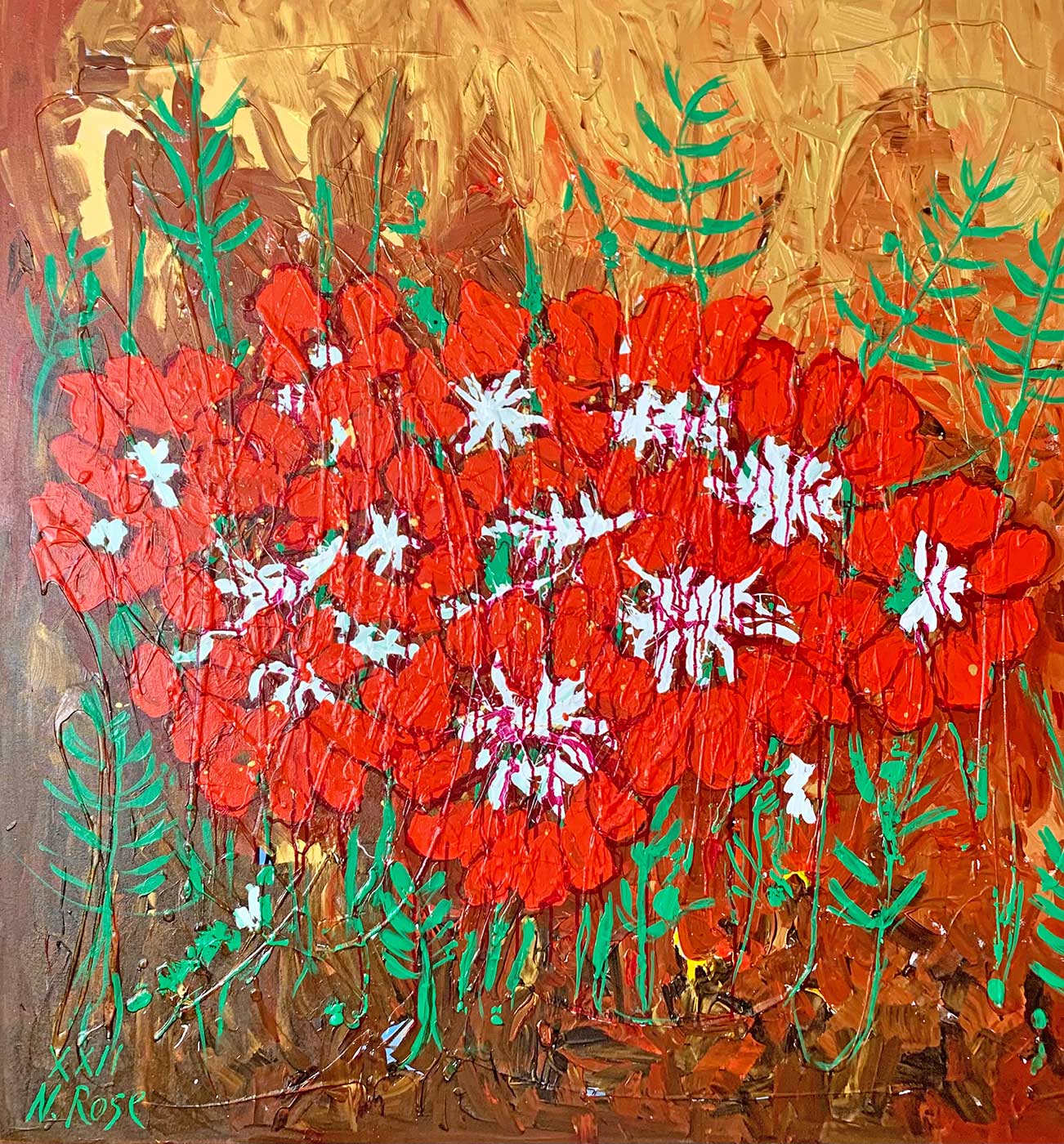
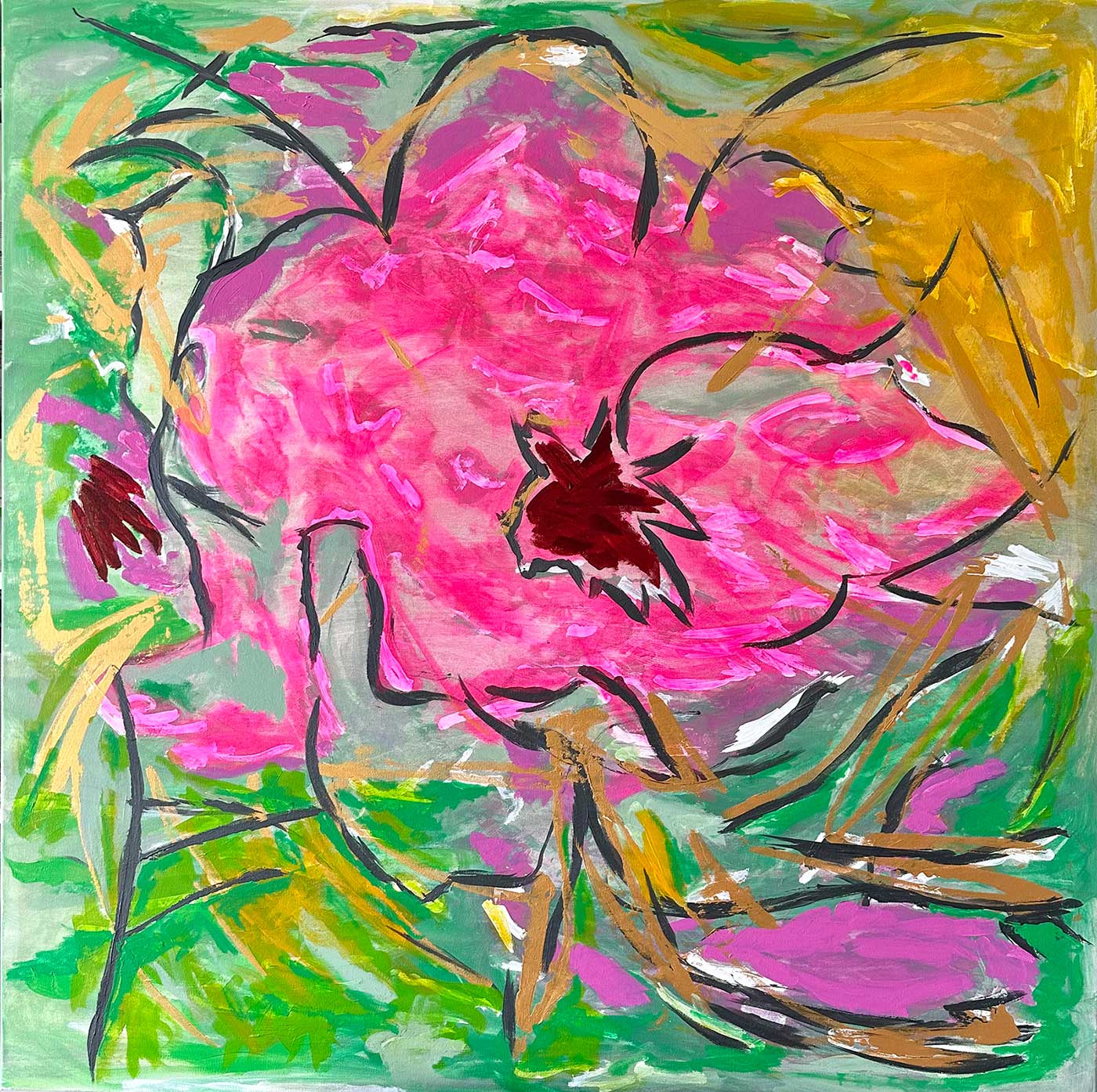
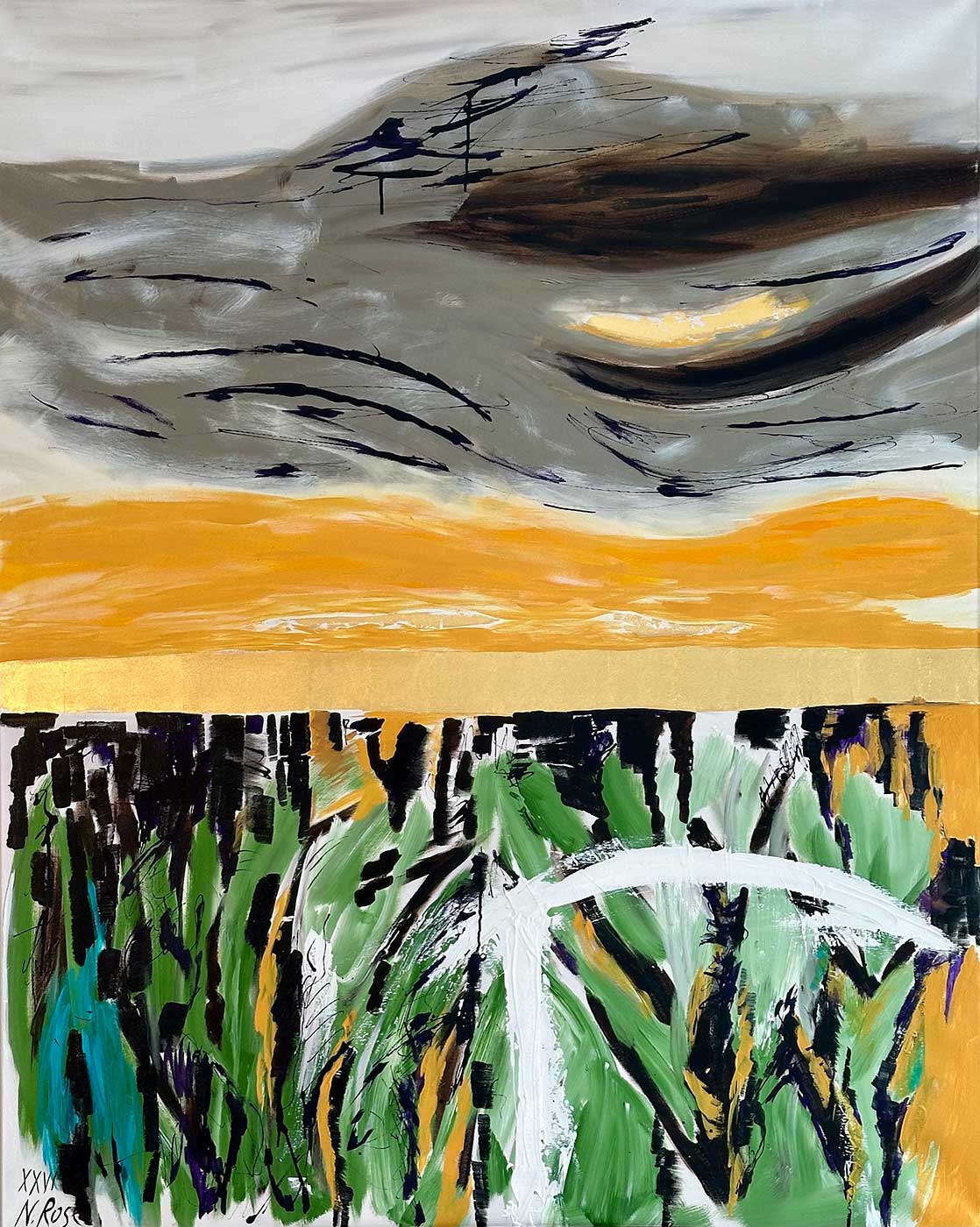
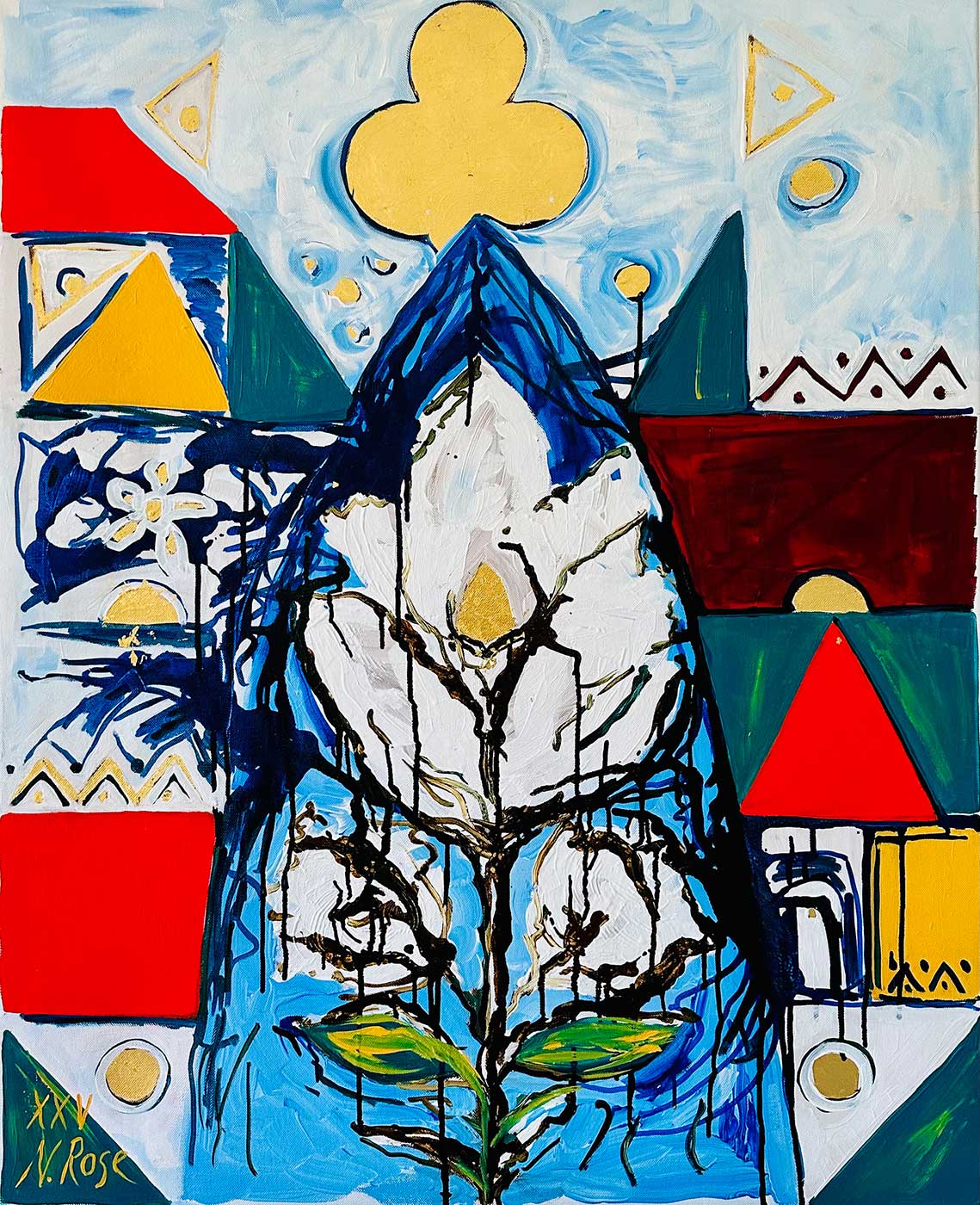
Natalia Rose has developed an expressive, semi-abstract visual language characterised by gestural, impasto-like brushwork and the intense spontaneity of Abstract Expressionism.
Born in Stavropol, Russia, in 1953, the artist initially studied at Lomonosov Moscow State University, later continuing her studies at the University of Copenhagen. This education laid the foundation for her unique synthesis of Russian tradition and Nordic lightness.
Her compositions rely on the emotional impact of pure colour and the dynamism of the brushwork, rather than a purely representational reality. The dominance of intensely luminous, highly pigmented primary colours is unmistakable, with bold reds, radiant yellows, and deep blues often set in emotional contrast to one another. Rose combines these expressive possibilities of colour with a profound philosophical exploration that poses fundamental questions about human existence and the connection between the individual and the universe.
Although the works are highly abstract, they still evoke associations with nature and landscapes. Titles such as Autumn, Midsummer and The Sun's Downfall draw the viewer's attention to natural phenomena such as the changing seasons, sunsets and floral structures. Her artistic development reveals clear influences from the early Russian avant-garde and Central European Expressionism, which she translates into a contemporary visual language.
A distinctive feature of her work is its unfinished aesthetic. She deliberately leaves parts of the painting process incomplete, or overlays layers in such a way that the painting appears unfinished. Broad, heavy brushstrokes and palette knife marks create tactile, relief-like textures on the canvas. This open composition breaks down rigid details, inviting viewers to complete their own associations and meanings within the spaces of colour.
Her work has already been exhibited internationally in countries such as France, Switzerland and the United Kingdom.
DE
Natalia Rose: Die Dynamik der Farbe und die Ästhetik des Unvollendeten.
Natalia Rose hat eine expressive, semi-abstrakte Bildsprache entwickelt, die durch den gestischen, impastoartigen Farbauftrag und die intensive Spontaneität des abstrakten Expressionismus geprägt ist.
Die 1953 in Stawropol, Russland, geborene Künstlerin studierte zunächst an der Lomonossow-Universität Moskau und später an der Universität Kopenhagen. Diese Ausbildung legte den Grundstein für ihre einzigartige Synthese aus russischer Tradition und nordischer Leichtigkeit.
Ihre Kompositionen leben von der emotionalen Wirkung reiner Farbe und der Dynamik des Farbauftrags, losgelöst von einer rein abbildhaften Realität. Unübersehbar ist dabei die Dominanz stark leuchtender, hochpigmentierter Primärfarben: Kräftige Rottöne, strahlendes Gelb und tiefe Blautöne werden oft in emotionalem Kontrast zueinander gesetzt. Rose verbindet diese expressiven Möglichkeiten der Farbe mit einer tiefen philosophischen Auseinandersetzung, die fundamentale Fragen nach der menschlichen Existenz und der Verbindung zwischen Individuum und Universum stellt.
Obwohl die Werke stark abstrahiert sind, bleiben Assoziationen mit Natur und Landschaft bestehen. Titel wie "Autumn", "Midsummer" oder "Des Untergang der Sonne" lenken die Wahrnehmung auf atmosphärische Naturphänomene wie den Wechsel der Jahreszeiten, Sonnenuntergänge oder florale Strukturen. In ihrer Biografie lassen sich unverkennbare Einflüsse der frühen russischen Avantgarde, insbesondere Wassily Kandinsky, sowie des mitteleuropäischen Expressionismus wiederfinden, die Rose in eine zeitgenössische Bildsprache übersetzt.
Ein charakteristisches Merkmal ihrer Arbeit ist die Ästhetik des Unvollendeten. Rose lässt Teile des Malprozesses bewusst offen oder überlagert Schichten so, dass das Bild unfertig wirkt. Durch breite, schwere Pinselhiebe und Spachtelzüge entstehen reliefartige, haptische Texturen auf der Leinwand. Diese offene Komposition bricht starre Details auf und lädt die Betrachter:innen ein, eigene Assoziationen und Bedeutungen in den Farbräumen zu vervollständigen.
Ihre Arbeiten wurden bereits international in Ländern wie Frankreich, der Schweiz und dem Vereinigten Königreich ausgestellt.
See more of this artist here: Presentation 2026
Disclaimer: The exhibition organiser or website operator is not responsible for the content of the texts and images provided by the exhibitors. The respective operator of the linked Internet pages (websites) is solely responsible for the content of the linked pages.
See also Copyright / Disclaimer.